9) Renting Out, Management & Resale
You can live in it, rent it, or resell anytime.
We can introduce property managers for tenant sourcing, contracts, collections, cleaning, and maintenance.
- Rental income can be paid to your home-country bank (bank charges apply) or to a Thai account if you open one later.
- If rent is paid by a company, agency, or manager, they may withhold 15% of gross rent as a compliance hold and remit it to the Revenue Department, issuing you PND 53 withholding certificates. Also possible to declare and claim a refund at the Revenue Department afterwards.
This prepayment is credited against your final personal income tax, which is calculated on 70% of your rent after the 30% standard expense deduction at progressive rates. If the payer is an individual tenant, there is usually no withholding and you pay the full tax at filing.How refunds work?
Apply for a Thai Tax ID number. File the annual PND 90 return by 31 March for the prior year and upload your PND 53 certificates. If the withheld amount exceeds your final tax, the Revenue Department refunds the difference to your nominated Thai bank account or by cheque.
When you sell, the buyer will again need foreign remittance proof; the seller pays transfer-time taxes/withholding as above.
10) Banking Practicalities for Mauritian Buyers
Consider an MCB/SBM foreign currency account to stage your currency conversions gradually, then remit when ready.
If you’re in Thailand, you can still initiate international transfers via your Mauritian bank app/online banking.
For those without online access, a home-country POA lets a trusted person initiate transfers on your behalf.
11) If the Building Is Damaged or Expropriated
Thai law provides procedures if a condominium is partially or largely destroyed or expropriated, including resolutions by co-owners to repair/rebuild or compensate and cancel certain titles. Practically, you should also ensure your unit and building insurance are in place (often handled by the juristic person for common property; unit contents/fixtures are your choice).
12) What Can Delay a Transfer?
Foreign quota full.
Mismatch between sender name on remittance and buyer name; missing purpose line on transfers; incomplete POA legalization.
Funds arriving from a third party or company not matching the buyer’s name.
Missing or incorrect FET/Bank Letter details.
SPA not signed in original (no e-sign).
POA not properly notarized/legalized.
Unpaid CAM fees or developer balances on the seller’s side.
13) Quick Checklists
Buyer (you):
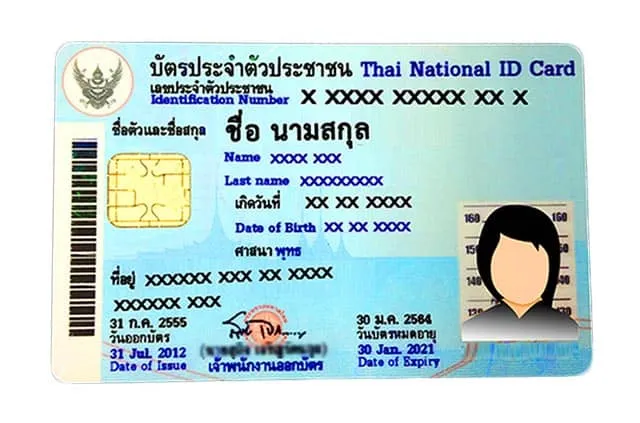
Passport + proof of address
SPA signed in original
POA (if absent at transfer), notarized/legalized
Funds sent from your overseas bank
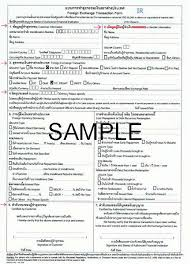
FET (≥ USD 50k single transfer) or Bank Credit Note/Confirmation of Inward Remittance (< USD 50k)
Seller/Developer:
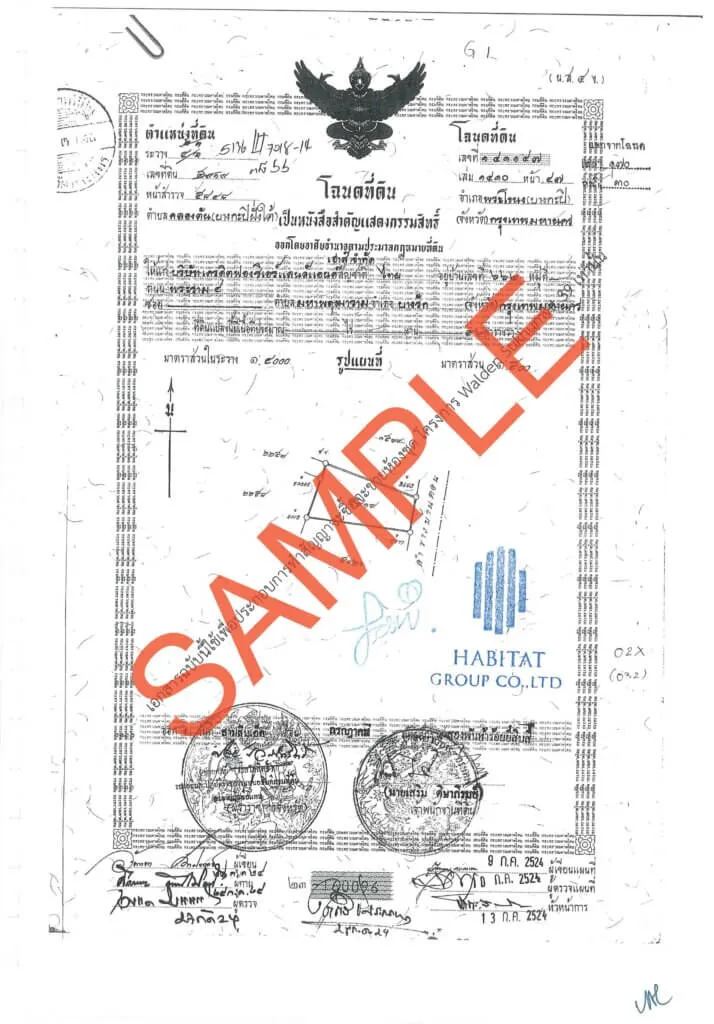
Original Chanote (title deed)
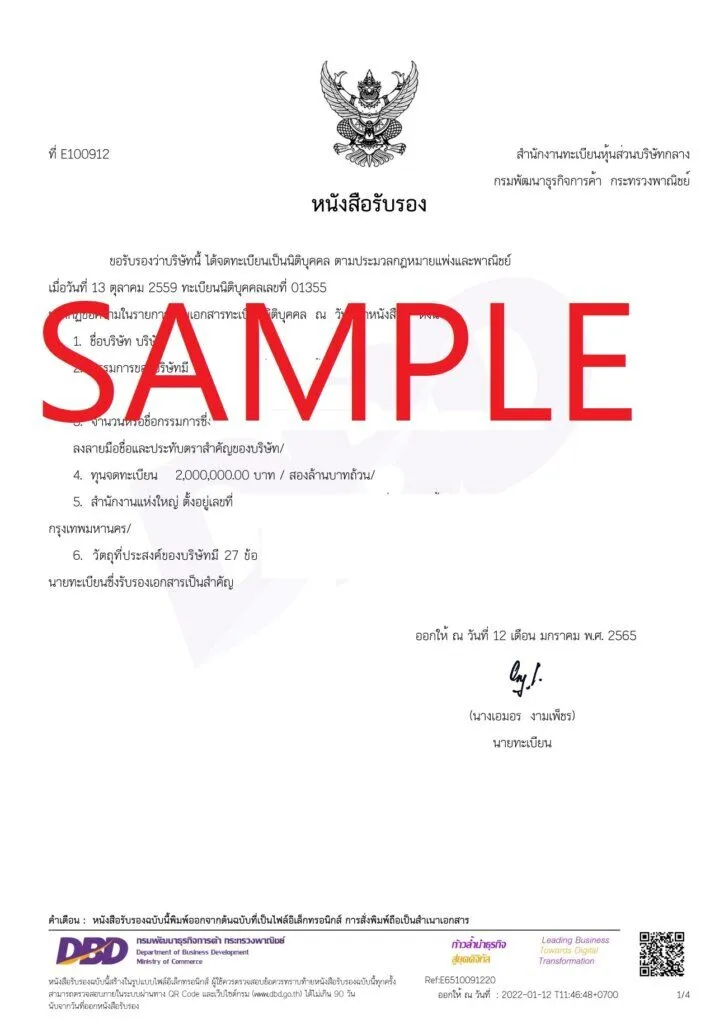
ID/Passport + company docs (if company)
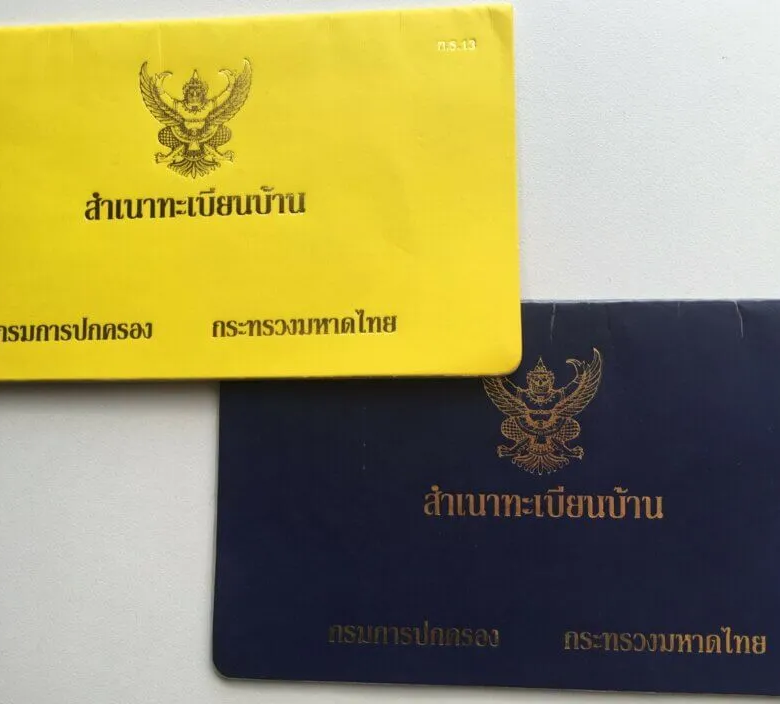
House registration (Tabien Baan) if applicable
No-debt letter from the condo juristic person (and foreign-quota confirmation if buyer is foreign)
14) Quick Purchase Timeline (3–6 weeks)
Week 1
Shortlist and view → Reserve unit → Start due diligence
Week 2
Sign SPA in original → Arrange first bank transfer from overseas → Bank issues FET or Bank Credit Note
Week 3–4
Complete remaining transfers per SPA → Book Land Department
Week 4–6
Ownership transfer at Land Department → Receive title deed and house registration → Handover and move-in or rent-out
15) Condo Fees Explained: Sinking Fund, and CAM
Sinking fund: 300–1,500 THB/sqm one-time (first transfer from developer to first owner).
CAM: 30–120 THB/sqm/month, billed monthly/quarterly/annually in advance.
Sinking fund
A one-time reserve collected by the building to cover major repairs to shared assets such as elevators, façade, pool systems and fire equipment.
• When you pay: at first transfer from the developer to the first owner
• Who pays: the first owner only
• How it’s calculated: rate per square metre × your unit size
• Typical range: 300–1,500 THB per sqm
Common Area Maintenance (CAM) fee
Covers day-to-day operations of the building: security, cleaning, landscaping, pool and gym upkeep, common-area electricity, routine servicing and building insurance for common property.
• When you pay: monthly, quarterly or annually in advance, depending on the building
• Who pays: the current owner from the transfer date onward
• How it’s calculated: rate per square metre × your unit size
• Typical range: 30–120 THB per sqm per month
16) Tax Obligations for Foreign Condo Owners (Non-Residents)
When you own a condominium in Thailand in your personal name, you are considered an individual taxpayer in Thailand. Even if you live abroad, income earned in Thailand (such as rent from your condo) must be reported to the Thai Revenue Department. Below is everything you need to know.
1. Rental Income Tax (Personal Income Tax)
If you rent out your condo, the income is considered Thai-sourced personal income.
You are entitled to a 30% standard expense deduction.
The remaining 70% of the rent is subject to progressive Thai income tax rates:
- First 150,000 THB → 0%
- Next 150,000 THB (150,001–300,000) → 5%
- Next 200,000 THB (300,001–500,000) → 10%
- Next 250,000 THB (500,001–750,000) → 15%
- Next 250,000 THB (750,001–1,000,000) → 20%
- Next 1,000,000 THB (1,000,001–2,000,000) → 25%
- Next 2,000,000 THB (2,000,001–5,000,000) → 30%
- On the remainder (over 5,000,001) → 35%
Example: If you rent your condo for 30,000 baht per month (360,000 baht per year):
- 30% expense deduction = 108,000 baht
- Taxable income = 252,000 baht
- Tax payable = 5,100 baht (only the portion (102,000) above 150,000 is taxed at 5%).
2. Withholding Tax on Rental Income
- No Thai Tax ID (temporary 15% holdback): If you do not have a Thai Tax ID and you ask a Thai company or property manager to remit your rent (especially to an overseas account), they may withhold 15% of the gross rent as a temporary compliance hold. You can later file an annual Thai return (PND 90) and claim a refund of any excess so your final tax equals the normal progressive PIT on 70% of your rent (after the 30% standard expense deduction).
- The withheld amount is treated as an advance credit against your yearly income tax.
- If your tenant is a private individual, no withholding applies — you must declare the full rental income yourself when filing.
Why do they do that?
So the government is sure at least part of your tax gets paid on time.
Later, when you do your tax return, you subtract what was already withheld:- If your real tax is more than what was withheld → you pay the difference.
- If your real tax is less than what was withheld → you get a refund.
3. Land and Building Tax (Annual Property Tax)
All property owners in Thailand must pay this small annual tax.
- For condos rented out (not your primary home), the rate starts at 0.02% of the appraised value.
- Example: A condo valued at 5 million baht = 1,000 baht annual tax.
- This is billed once per year by your local district office, usually in January–April.
4. Selling Your Condo (Exit Taxes)
When you sell your unit, the following apply:
- Transfer Fee: 2% of the registered value (normally split 50/50 with buyer).
- Specific Business Tax (SBT): 3.3% if you sell within 5 years of purchase (unless transferred to an heir or spouse).
- Stamp Duty: 0.5% if SBT does not apply.
- Withholding Tax on Sale: Calculated based on the appraised value and length of ownership, generally around 1%–3%.
5. Filing Requirements for Foreign Individuals
- You must apply for a Thai Tax ID number (TIN) at the Revenue Department.
- Annual tax filing must be done by 31 March each year (covering the previous calendar year).
- Filing can be done online through the Revenue Department’s e-filing portal or through a representative (lawyer, accountant, or property manager).
- Most foreign owners appoint a property management company to handle both tax payments and rental collection on their behalf.
6. Double Taxation Considerations
Thailand has Double Taxation Agreements (DTA) with many countries, which prevents paying tax twice on the same income. However, Mauritius does not currently have a DTA with Thailand. This means:
- You pay tax in Thailand.
- You also declare the income in Mauritius.
- You can often claim a foreign tax credit in Mauritius to offset the Thai tax paid.
Many foreign buyers worry about being taxed twice — once in Thailand and once in Mauritius. Here’s the good news: because Thailand’s income tax rates are generally higher than Mauritius’s, you will almost never end up paying extra tax in Mauritius on your rental income.
How It Works
- Thailand taxes your rental income first.
- You then declare this same income in Mauritius.
- Mauritius gives you a credit for the tax you already paid in Thailand.
- Since the Thai tax is usually higher, there’s nothing more to pay in Mauritius.
Example: Rental Income = THB 600,000 (≈ Rs 846,000)
Thailand (non-resident individual; condo rental)
1) Start with gross rent
- Gross rental income: 600,000 THB
2) Apply Thailand’s standard rental expense deduction
- Statutory deduction for condo letting: 30%
- Deduction amount: 600,000 × 30% = 180,000 THB
- Thai taxable income: 600,000 − 180,000 = 420,000 THB
(No personal allowances for non-residents.)
3) Apply Thailand’s progressive tax bands to 420,000 THB
- 0–150,000 @ 0% = 0
- 150,001–300,000 (150,000) @ 5% = 7,500
- 300,001–420,000 (120,000) @ 10% = 12,000
- Sum = 19,500 THB Thai PIT
4) Convert Thai tax to Mauritian rupees for comparison
- 19,500 × 1.41 = 27,495 MUR
Example: 600,000 THB rent, 15% withheld by manager
Gross rent (year): 600,000 THB
Standard rental expense deduction (30%): 180,000 THB
Thai taxable income: 420,000 THB
Personal income tax on 420,000 THB:
0–150,000 @ 0% = 0
150,001–300,000 (150,000) @ 5% = 7,500
300,001–420,000 (120,000) @ 10% = 12,000
Total Thai PIT = 19,500 THB
Withholding by property manager (their policy):
15% of 600,000 = 90,000 THB withheld and paid to Revenue Dept.
Year-end result when you file:
Withholding credit 90,000 − Final tax 19,500 = Refund ≈ 70,500 THB
(If your tenant is a private individual and doesn’t withhold, you simply pay 19,500 THB at filing instead.)
Mauritius (resident for tax there; same income converted)
1) Convert the same income to MUR
- 600,000 THB × 1.41 = 846,000 MUR
2) Apply Mauritius progressive bands to 846,000 MUR
(I’m using the bands you provided: 0%, 2%, 4%, 6%, 8%, then 10% on the next 300,000, etc.)
- First 390,000 @ 0% = 0
- Next 40,000 @ 2% = 800
- Next 40,000 @ 4% = 1,600
- Next 60,000 @ 6% = 3,600
- Next 60,000 @ 8% = 4,800
- Remainder up to your total (you’ve used 390k+40k+40k+60k+60k = 590,000; left 256,000)
256,000 @ 10% = 25,600
Mauritius PIT (on this income) = 0 + 800 + 1,600 + 3,600 + 4,800 + 25,600 = 36,400 MUR
Convert to THB for comparison: 36,400 ÷ 1.41 ≈ 25,816 THB
Double-tax relief (how the two interact)
Mauritius gives a foreign tax credit for tax already paid on the same income in Thailand. You don’t pay both in full — you pay Thailand first, then only the difference in Mauritius (up to the Mauritius tax on that income).
- Thai tax paid (creditable in MU): 27,495 MUR
- Mauritius tax on that income: 36,400 MUR
- Top-up due in Mauritius = 36,400 − 27,495 = 8,905 MUR (≈ 6,313 THB)
Your final total tax on this rent (both countries combined):
- Thailand: 19,500 THB
- Mauritius top-up: ≈ 6,313 THB
- Total ≈ 25,813 THB (which equals the 36,400 MUR Mauritius would charge on that income — the foreign tax credit simply avoids double-paying).
7. Key Takeaways for Individual Owners
- Rental income is taxed progressively after a 30% deduction.
- A 15% withholding is usually applied by corporate tenants or agents.
- Land and Building Tax is very low compared to property value.
- Selling your condo involves transfer fees, withholding tax, and possibly Specific Business Tax.
- Annual tax filing is mandatory and can be done remotely.
- Most foreign owners rely on an accountant or property manager to handle tax filing.
17) Property investment in Thailand (Condominiums)
Thailand’s tourism engine and lifestyle demand make condominiums a popular investment for international buyers. Options range from entry-level city units to luxury beachfront residences. Buyers can hold a unit in freehold under the Thai Condominium Act (subject to the building’s 49% foreign quota). Units can be used personally, rented long-term, or (where lawful) for short stays via a licensed operator. Note: short-stay rentals (e.g., “Airbnb”) are regulated and not permitted everywhere. Always confirm the building’s rules and local laws before marketing short-stay rentals.
Rental programs at a glance
Guaranteed rental program
A fixed net yield (e.g., “7%/year”) is set in the Sale & Purchase Agreement or a rental contract for a defined period.
Often includes limited owner-use nights (e.g., 15–30 nights/year).
Predictable income; usually no upside beyond the agreed rate.
Rental pool program
All participating units’ revenue is pooled and redistributed by a set formula (often pro-rata by sqm) after management’s share.
No guarantee; can be higher or lower than a fixed yield depending on occupancy/ADR.
Smoother income across seasons; potential for upside in strong years.
Tax note on rental income (for individuals):
A statutory 30% expense deduction applies to residential letting. Only the remaining 70% of gross rent is taxed at progressive personal income tax rates.
15% rent withholding (common payer/manager policy): many corporate tenants/managers withhold 15% of gross rent when the owner has no Thai Tax ID or when rent is remitted overseas. This is treated as a prepayment/credit. At year-end the owner files a Thai return; if 15% exceeds the actual tax due, the excess is refunded. Keep the payer’s withholding certificates for filing.
18) Buy a property in Thailand with a Thai limited company or an offshore company (condo context)
Most foreign buyers of condominiums purchase personally as foreign freehold (within the 49% quota). Company routes exist but come with important caveats:
Thai limited company (general points)
A Thai company can own property. However, nominee arrangements are illegal. Thai shareholders must be genuine and the company must be operated and compliant (accounts, taxes, filings).
Running a company has setup/maintenance costs and compliance obligations.
For condos, company ownership is typically not required since foreigners can already hold freehold within quota.
Offshore / foreign company
A foreign company is treated as a foreign entity. Buying a condo under a foreign company still requires compliance with the foreign quota and foreign remittance proof (FET/Credit Notes).
Typical documents (translated to Thai and legalized/consularized, often valid 30 days for transfer):
Certificate of incorporation
Directors’ identity documents
Shareholder list
Board/shareholder resolution approving the purchase
Important: company structures affect tax, accounting, and exit planning. Obtain independent legal and tax advice before choosing a structure.
19) Can I open a bank account in Thailand?
Some banks allow non-residents to open an account in connection with a property purchase. Policies change frequently and vary by branch. Typical asks include:
- Signed Sale & Purchase Agreement (SPA)
- Official payment receipts
- Passport with recent Thai entry stamp
- Small initial deposit
Having a Thai account helps with utilities, juristic fees, and receiving any Thai tax refunds (if due). However, purchase monies must still be remitted from overseas in foreign currency so the Thai receiving bank can issue FET/Credit Notes for Land Department registration.